Oak processionary moth (OPM) nest removal
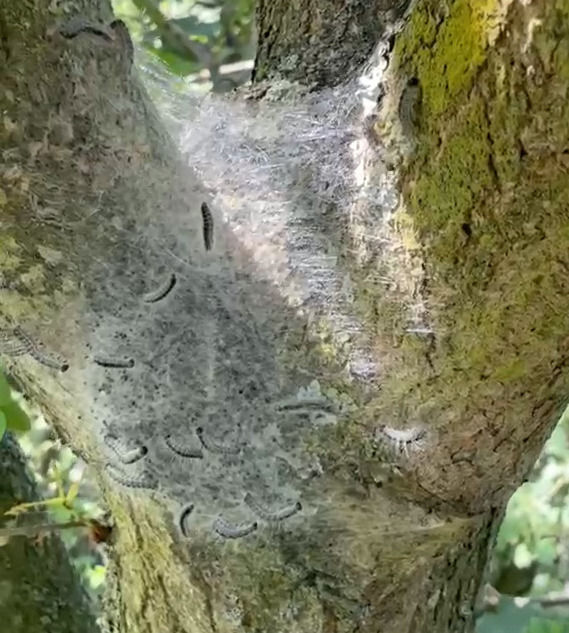
Silky nests on an oak trunk or branch? Keep away from them and give me a call.
What it is and why it matters
Oak processionary moth is a pest that has become established in London and the counties around it. Its caterpillars feed on oak leaves and can strip a tree. They travel in nose-to-tail processions, and build white silky nests on trunks and branches.
The bigger concern is health. The caterpillars and their nests contain tiny hairs that can cause itchy rashes, eye and throat irritation and, occasionally, breathing difficulties in people and animals. Old nests turn brown but stay on the tree for months.
Don't touch, brush against or try to remove nests yourself. Keep children and pets away from the tree.
The OPM season
Timings shift from year to year, and a warm spring brings everything forward. This is the usual pattern in and around London.
I remove nests at any time of year, including old ones. Most of my OPM work is in June to August, after the caterpillars have hatched and before the moths fly. Winter is a good time to check your oaks: with no leaves on the tree, nests are much easier to spot.
What I do
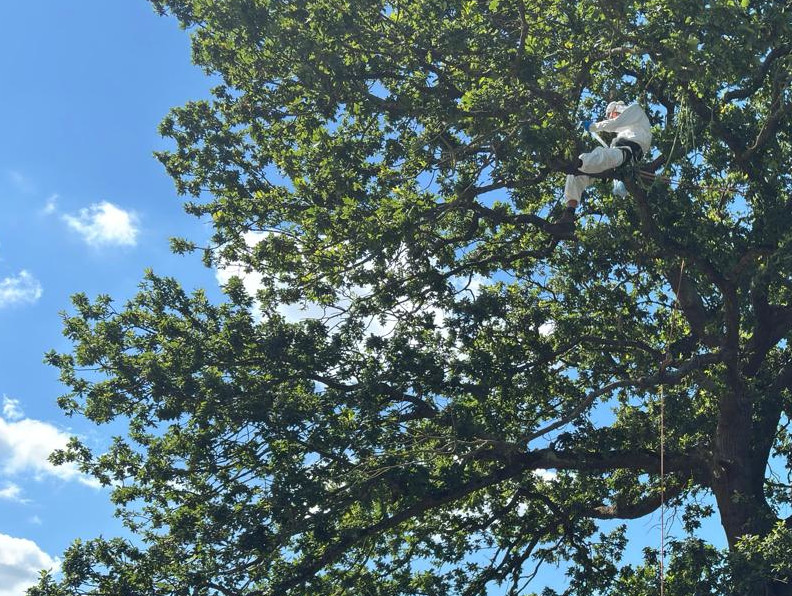
I remove OPM nests from oak trees, working in protective clothing and with breathing protection. Nests are sealed up and taken away for safe disposal, so they aren't left behind in your garden or green waste.
I don't spray. Spraying can harm other wildlife, so I remove the nests instead.
What does it cost?
See an example OPM removal with before-and-after photos and the price.
Before you call
- If the oak is on private land, arranging removal is the owner's responsibility.
- If it's on a council-owned tree, report it to the council. In Richmond, for example, they ask you to report it to them.
- The Forestry Commission asks for sightings to be reported through its TreeAlert online form.
- If someone has come into contact with the hairs and has a rash or irritated eyes, a pharmacist can help with the symptoms.